
Visual Identity
How to Test a Brand Color Palette With Real Users
Wiseland Studio · October 30, 2026

Choosing a palette in a design team can turn into a debate about personal taste. A small test moves the discussion toward evidence. You do not need a laboratory: a few realistic samples, people from the intended audience and neutral questions can reveal misunderstandings before the brand system is finalized.
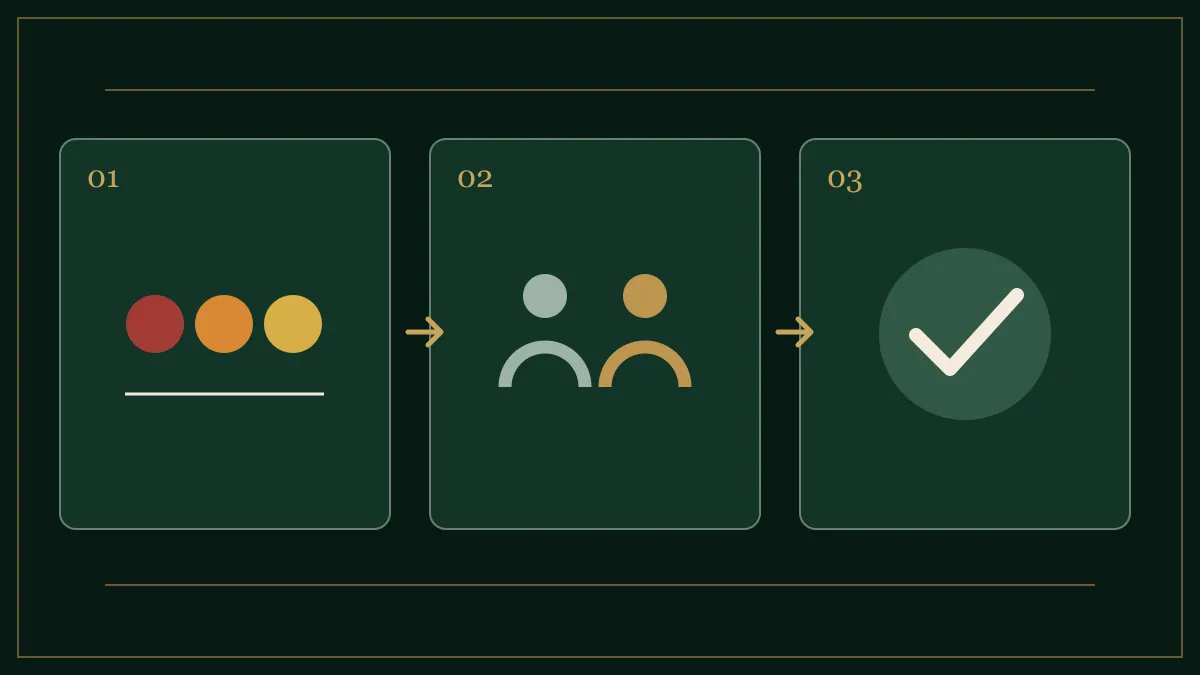
Prepare comparable options
Make two or three versions of the same business card, mobile header and product or service panel. Change only the palette. Keep the words, images, size and typefaces fixed. Include one practical constraint in every version: body copy, a link, a button and a small logo. This exposes weaknesses that a board of large color swatches hides.
Ask without leading
Show each version separately to five or more people who resemble the target customers. Ask: “What kind of company is this?”, “What would you click first?”, “Which part is hardest to read?” and “Which version would you recognize again tomorrow?” Let them answer before describing your intention. Record both recurring patterns and surprising one-off interpretations. A small test is directional evidence, not a statistical guarantee.
Measure what can be measured
Check text/background contrast at actual sizes against W3C guidance. Try the mobile design in bright light and a printed proof under normal room light. Confirm that status or category is communicated by words or icons as well as color. For recognition, shuffle the samples after a short pause and ask which one they saw earlier; do not interpret a single answer as definitive.
Make the decision traceable
Score each palette on clarity, recognition, suitability for the audience, contrast and production cost. Write down why you chose it and where it may fail. The final deliverable is not just HEX values; it is a small rulebook for backgrounds, text, accents and accessible alternatives. Read the color psychology context guide before defining the hypothesis and the brand palette guide when implementing the result.