
Visual Identity
Red, Orange and Yellow in Brand Identity
Wiseland Studio · October 24, 2026

Warm hues can make a design visible quickly, which is useful on a crowded shelf or a small button. But visibility is only one job. Red, orange and yellow change character with saturation, surrounding colors, typography and the product category. Choose the role first; do not paint an entire identity with the loudest swatch because it attracted attention in a mood board.
Give red a clear purpose
Red can emphasize a sign, offer or key detail, but a large saturated red field can overpower information. Try a small red accent next to a calm neutral base. Check the same sample at phone size and in print. If both a warning and a purchase action use red, their meanings compete. Give each action a distinct shape and label as well as color.
Let orange and yellow work with the content
Orange can feel lively on a food package or service brand, yet the same shade may resemble nearby competitors. Yellow can be highly noticeable but often needs dark text to remain legible. Never assume black or white type works on every yellow or orange: test the exact pair and text size. Print a proof if packaging is the final medium because paper and ink shift the appearance.
Make three small comparisons
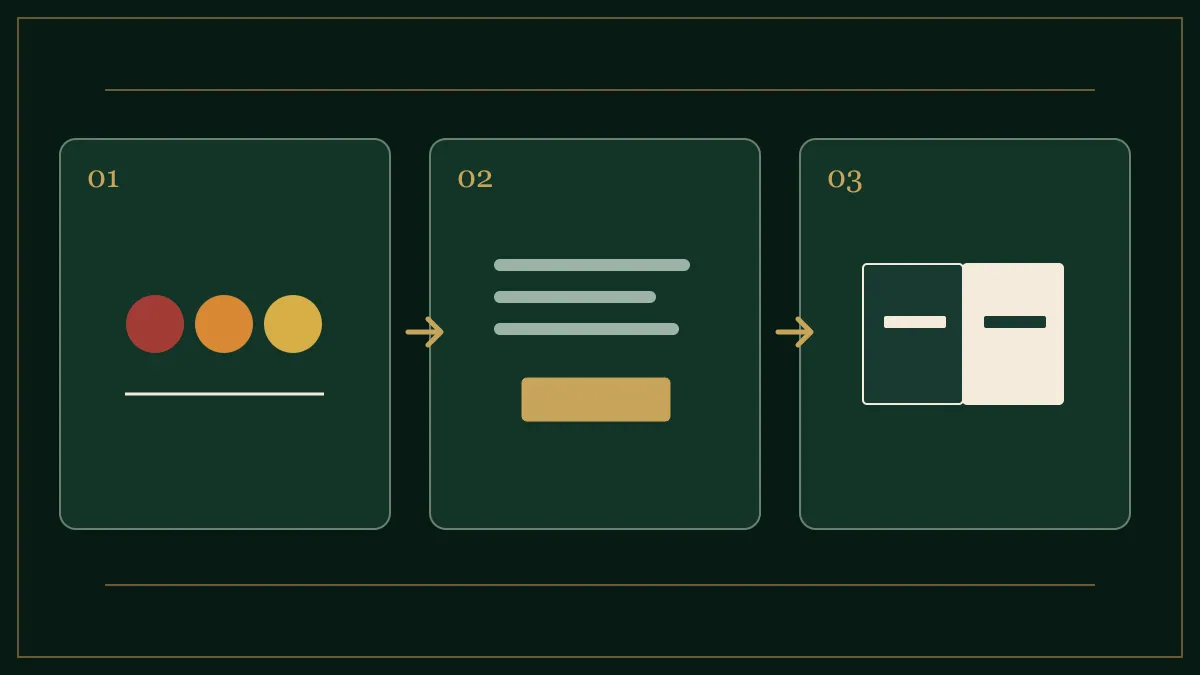
Build the same card, product tile or landing-page header in three versions: warm accent only, warm supporting color, and warm dominant color. Keep layout and copy identical. Ask five intended users what they notice and what kind of offer they expect. Note whether they can find the main action without being told. Then check contrast and use a neutral grayscale view to see whether hierarchy survives without hue.
A useful palette can combine one warm signal with quieter tones. The next question is whether it fits the brand’s market and voice. Our visual identity work shows how these decisions appear across different applications. For the broader method, read color psychology in context. The W3C contrast guidance provides a measurable check for text readability.