
Studio Notes
How to Write a Design Case Study, Not Just an Image Gallery
Wiseland Studio · October 14, 2026
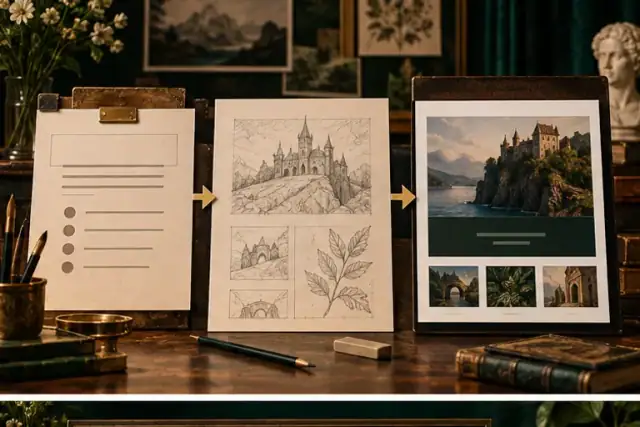
An image gallery shows how a design looks, but not always why the decisions were made or what the client needed. A useful case study lets a future client understand your thinking. It does not require exaggerating unknown business outcomes.
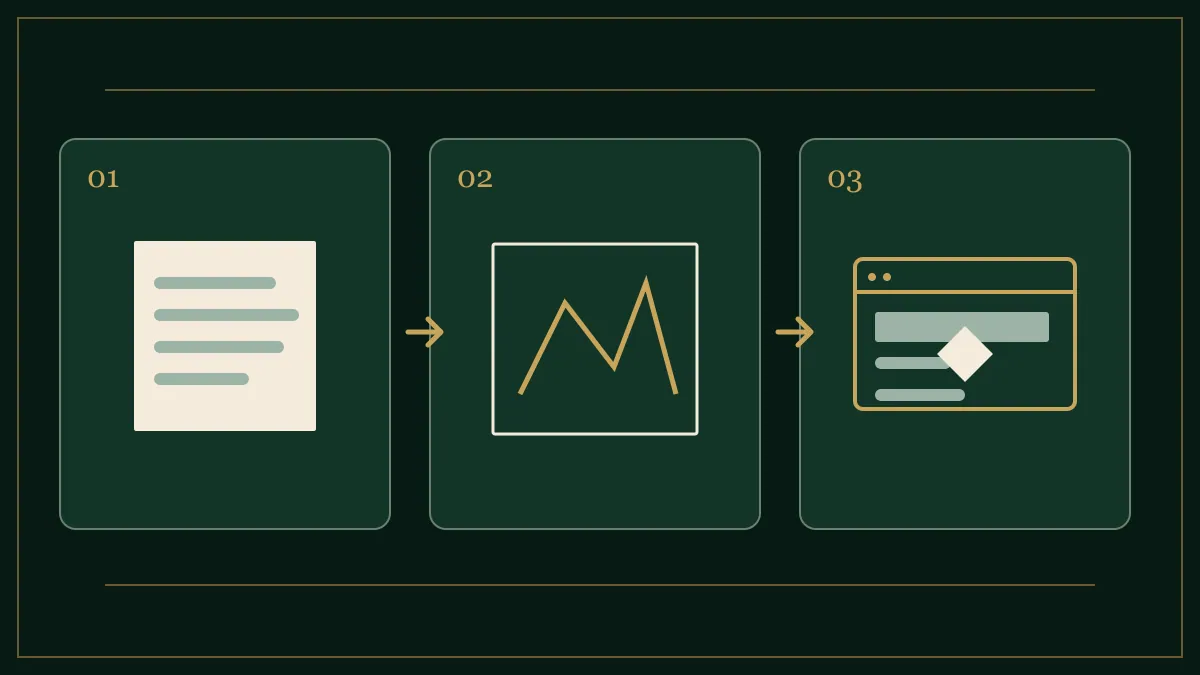
Start with the problem, not the software
In two or three sentences, describe the client, the change they sought and the project scope. “Designed in Illustrator” does not define a problem. A clearer example: “A mobile store needed a mark that could remain legible across its card and website.” If details are confidential, explain the challenge without sensitive information.
State your role and constraints precisely
Did you design the logo, build the site or supply illustration only? Do not claim another teammate's work. Real constraints such as bilingual use, sign size, one-colour print or a deadline explain why decisions were made. Avoid claiming “extensive research” without showing the method or what it revealed.
Connect decisions to images
Write one analytical sentence for each important visual. For example, “The one-colour mark was prepared for stamps and invoices,” or “Cards stack in one mobile column so copy remains readable.” A mockup shows the use context; add a relevant close-up if the work's detail cannot be seen there. Keep raw artwork and contextual mockups clearly distinguished, and make the main image recognisable on a phone.
Describe outcomes with evidence
Do not invent sales or conversion figures. A valid outcome may be delivery of required variants, removal of inconsistencies across touchpoints or print-ready files. If the client permits it, add a short attributed comment. Update the article later, with a modification date, if real performance data becomes available.
A case-study template
- Client and problem; 2. Goal and scope; 3. Your role and constraints; 4. Two or three key decisions with images; 5. Exact deliverables; 6. Verifiable outcome; 7. Related work or contact route. Make the page title specific too: “Logo and business card design for a mobile shop” tells more than “Our new project.”
You can inspect narrative structure in the Wiseland portfolio. For a new commission, the logo brief guide helps define the problem before the work begins.